

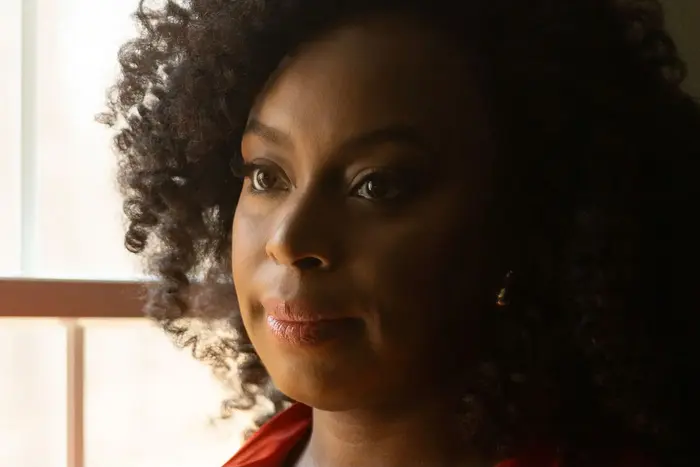

Nigerian author Chimamanda Ngozi Adichie has opened up about grieving her 21-month-old son, Nkanu, explaining why she and her husband, Dr Ivara Esege, chose to cremate him and why Nigeria no longer feels the same to her.
Nkanu died in January 2026 after developing complications during medical procedures at Euracare Multi-Specialist Hospital in Lagos.
Adichie and Esege have alleged medical negligence in their son’s treatment, while Euracare has denied wrongdoing. A Medical and Dental Council investigation later found a prima facie case of negligence against three doctors involved in Nkanu’s care.
In a recent interview with The New York Times, Adichie recalled that doctors gave Nkanu Propofol for an MRI before he suffered cardiac arrest.
She said a doctor later told her, “Well, look, they gave him too much Propofol,” a statement she said she would never forget.
The family has also said doctors did not properly explain the severity of Nkanu’s condition or exactly when he died.
Adichie on grieving her son
Nkanu’s absence remains clear in the family home. His highchair still sits beside his twin brother’s at the dining table, while his clothes remain folded in his room.
Adichie said she has also had to adjust to buying clothes for one boy instead of two. She sometimes adds two identical items to her online shopping cart before remembering that she now needs only one.
The couple chose cremation after suffering several losses in the years before Nkanu’s death, including the deaths of Adichie’s parents and Esege’s brother.
Recalling a conversation with her husband the day after Nkanu died, Adichie said:
“I just remember looking at IV and saying, ‘Do we have to have another funeral?’ We’ll cremate him. We’ll take him with us because we can’t leave him behind.”
The decision has since become part of the legal dispute over the coroner’s inquest into Nkanu’s death. Euracare has challenged the proceedings partly because the child had been cremated before the inquest began.
For Adichie, however, the decision came from grief and a desire to keep her son close.
“When my father died, I was struck by the physicality of grief. And this time, even more so, I feel it. It’s in my stomach, and it’s in my chest, and you’re just so tired every day. Everything is difficult. Everything.
“And then you have to pretend because you have children, and you’re terrified of how they’re doing. Sometimes my son doesn’t want me to hold him because I’m so weepy. He’s 2. So I really try. It feels like the full manifestation of my grief is impossible because of the condition of being a mother.”
‘My feelings toward Nigeria have changed’
Nkanu’s death has also changed Adichie’s relationship with Nigeria, a country her family had long considered a second home.
The family spent Christmases, Easter and summers in Nigeria, while their daughter still considers the country her “happy place”.
Adichie has described Nigeria as central to her life and writing, saying America allowed her to write, while Nigeria gave her what she needed to become the writer she is.
But the circumstances surrounding her son’s death have changed that connection.
“My feelings toward Nigeria have changed.”
Asked whether Nigeria was still where she felt she belonged, Adichie said:
“I do not want to go back to Nigeria.”
For an author who had long described Nigeria as home, the statement reflects the profound effect Nkanu’s death has had on her relationship with the country.








Leave a Reply