


Stronger AI disclosure rules roll out
YouTube is now set to automatically label videos that use “significant photorealistic AI use.” The move is part of a wider push to make AI-generated content easier to identify on the platform.
The company says the change responds to user demand for clearer information about synthetic media.
“We’ve heard consistently from our community that they value transparency when it comes to generative AI content,” YouTube said in a blog post on Wednesday announcing the updates. “These changes are designed to balance transparency with creator control.”
Automatic detection joins creator disclosure
Creators must still disclose when they use realistic AI tools. But YouTube will now add its own detection system.
“If a creator doesn’t specify whether or not they used AI, but our systems detect significant photorealistic AI use, we will now automatically apply a label,” YouTube said.
This means videos may receive labels even if creators do not self-report AI use.
Some AI labels will stay permanent
YouTube also confirmed that some AI labels will not be removed.
These permanent labels apply to content made with YouTube’s own AI tools, such as Veo or Dream Screen. They also apply to videos with C2PA metadata showing full AI generation.
In those cases, the labels will “remain permanent.”
Labels move to more visible positions
YouTube is also changing where AI labels appear on videos.
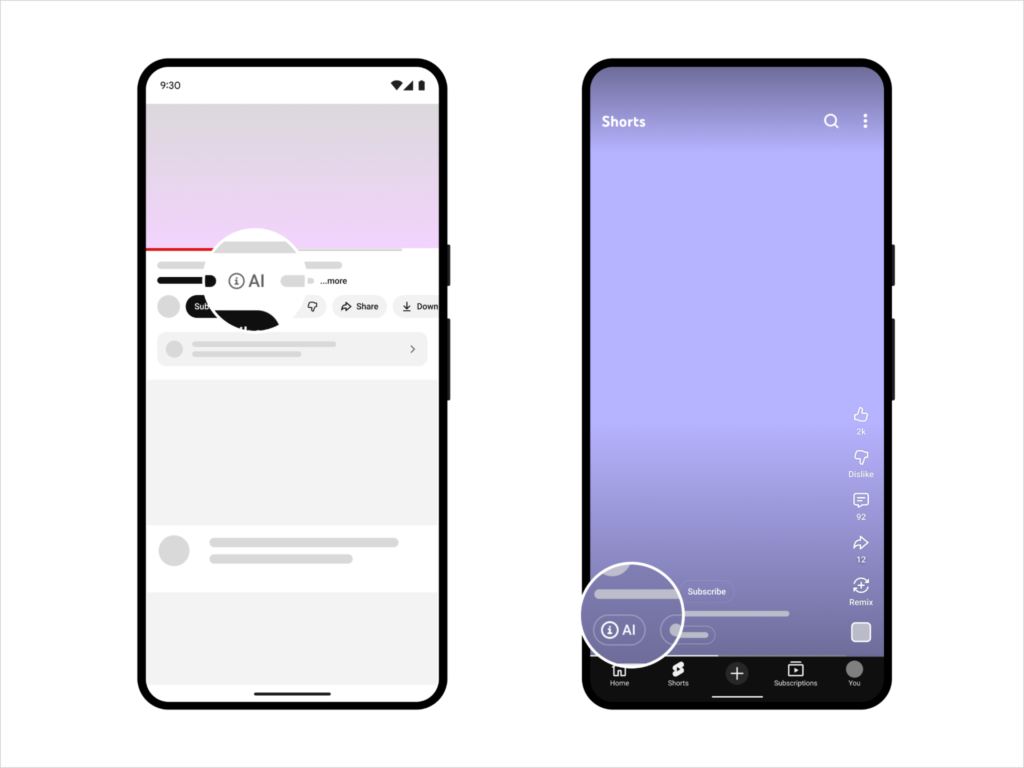
Long-form videos will now show the label directly under the player, above the description. Shorts will display the label as an on-screen overlay.
The company says this change improves visibility and helps viewers identify AI content quickly.
“The goal here is context at a glance. If it looks real but was made with AI, viewers will know immediately,” said Rene Ritchie, YouTube head of editorial and creator liaison.
He also confirmed the labels will not affect recommendations or monetisation.
Lower-level edits still listed in descriptions
Not all edited content will get full labels.
YouTube will still place disclosures for “unrealistic, animated or slightly altered” content in video descriptions instead of prominent labels.
AI likeness detection expands
YouTube has also expanded its likeness-detection system to all creators aged 18 and above.
The system helps detect videos that use a person’s face through AI manipulation. Creators can request the removal of content that uses their likeness without permission.









Leave a Reply