


In a forceful address this weekend, U.S. President Donald Trump issued a stern warning to Nigeria over what he described as the “killing of record numbers of Christians” and said that America “is not going to allow that to happen.”
Read more: Trump Warns Nigeria Over Alleged Killing of Christians, Cites Possible Military ActionSpeaking to reporters aboard Air Force One, Trump indicated that U.S. military options including deployment of troops or air strikes are on the table unless the Nigerian government acts swiftly to curb the violence. “Could be. I mean, other things,” he replied when asked whether troops or strikes were possible. “They’re killing the Christians and killing them in very large numbers. We’re not going to allow that to happen.”
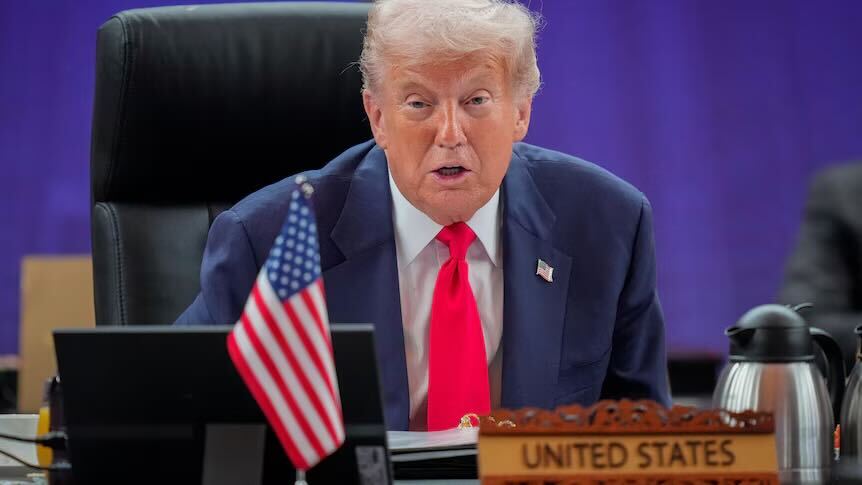
The warning comes as the U.S. has added Nigeria back to its “Countries of Particular Concern” list for religious freedom violations, placing it alongside nations such as China, North Korea and Myanmar.
Diplomatic Tension Ramps Up
Nigeria’s government swiftly rejected the notion of targeted Christian genocide. In a statement, President Bola Ahmed Tinubu reaffirmed that Nigeria “stands firmly as a democracy governed by constitutional guarantees of religious liberty” and dismissed the U.S. characterisation as inaccurate.
A presidential adviser in Nigeria said the government would welcome international assistance in fighting extremism so long as its sovereignty is respected. But he emphasised that the violence affects both Christians and Muslims, and that depicting the issue as a one-sided religious attack distorts the broader security context.
What President Trump Is Demanding
Trump’s message sets several thresholds: he has threatened to cut U.S. aid to Nigeria, and has instructed U.S. defence officials to prepare potential military plans targeting Islamist extremist groups he holds responsible. “If the Nigerian Government continues to allow the killing of Christians, the U.S.A. will immediately stop all aid and assistance,” he posted on social media.
When pressed for details, he said that any American action would be “fast, vicious and sweet” — reinforcing the urgency and severity with which Washington views the matter.
Wider Implications
Observers say this intensifies diplomatic pressure on Nigeria and underscores how religious freedom concerns are increasingly tied to national security and foreign policy. The Nigerian government now faces dual challenges: acting to protect vulnerable communities, while preserving its sovereignty and navigating international scrutiny.
As this story unfolds, the central question remains: Will Nigeria meet the demands of the United States, and will Washington follow through on its threats?







Leave a Reply