

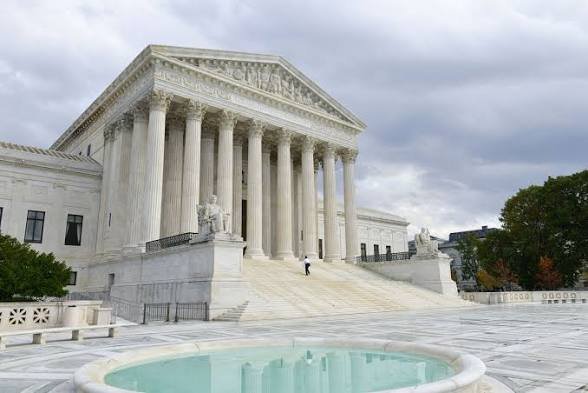

Trump mail-in voting changes received a major boost Monday after the Supreme Court voted 6-3 to lift one legal barrier. The ruling allows the Trump administration to implement several provisions of his March executive order concerning federal elections.
However, the justices did not decide whether Trump’s broader voting order ultimately violates constitutional limits on federal election authority. Twenty-three Democratic-led states and Washington, D.C., challenged the order, arguing that the president exceeded his constitutional powers.
Trump signed the executive order in March, directing federal agencies to introduce stricter citizenship verification requirements for federal voting. Under the order, Homeland Security would compile lists identifying United States citizens residing within individual states.
Those lists would then support federal election eligibility checks before ballots reach voters through mail voting systems. The order also directs federal prosecutors to prioritize cases involving officials who issue federal ballots to people deemed ineligible.
Additionally, the USPS must develop proposed rules requiring specific envelope markings, unique barcodes, and voter enrollment procedures. Those requirements could significantly change existing mail-ballot systems across states before November’s congressional elections.
The Supreme Court said the states challenged the administration’s plans prematurely because the agencies had not yet implemented final rules. Consequently, the justices lifted the injunction that previously prevented federal agencies from implementing important portions of Trump’s directive.
Three liberal justices — Sonia Sotomayor, Elena Kagan, and Ketanji Brown Jackson — dissented from Monday’s decision. Critics warn that the changes could create confusion for election officials and potentially affect voters who depend heavily upon mail ballots.
Supporters argue stronger verification procedures would protect election integrity and prevent people who cannot legally vote from receiving ballots. Meanwhile, another injunction remains in place, meaning Monday’s ruling does not automatically put every provision into effect nationwide.
Election officials also face significant time pressure because some states must begin sending military and overseas ballots during September. North Carolina, for example, expects to begin sending those ballots on September 4, creating limited time for major administrative changes.
The Trump administration now has greater room to advance its voting policies while separate lawsuits continue through lower federal courts. For voters, the final impact remains uncertain because courts could still block or modify portions of the controversial order.
The Trump mail-in voting changes therefore remain at the center of an intense legal and political battle before November’s midterms.









Leave a Reply