

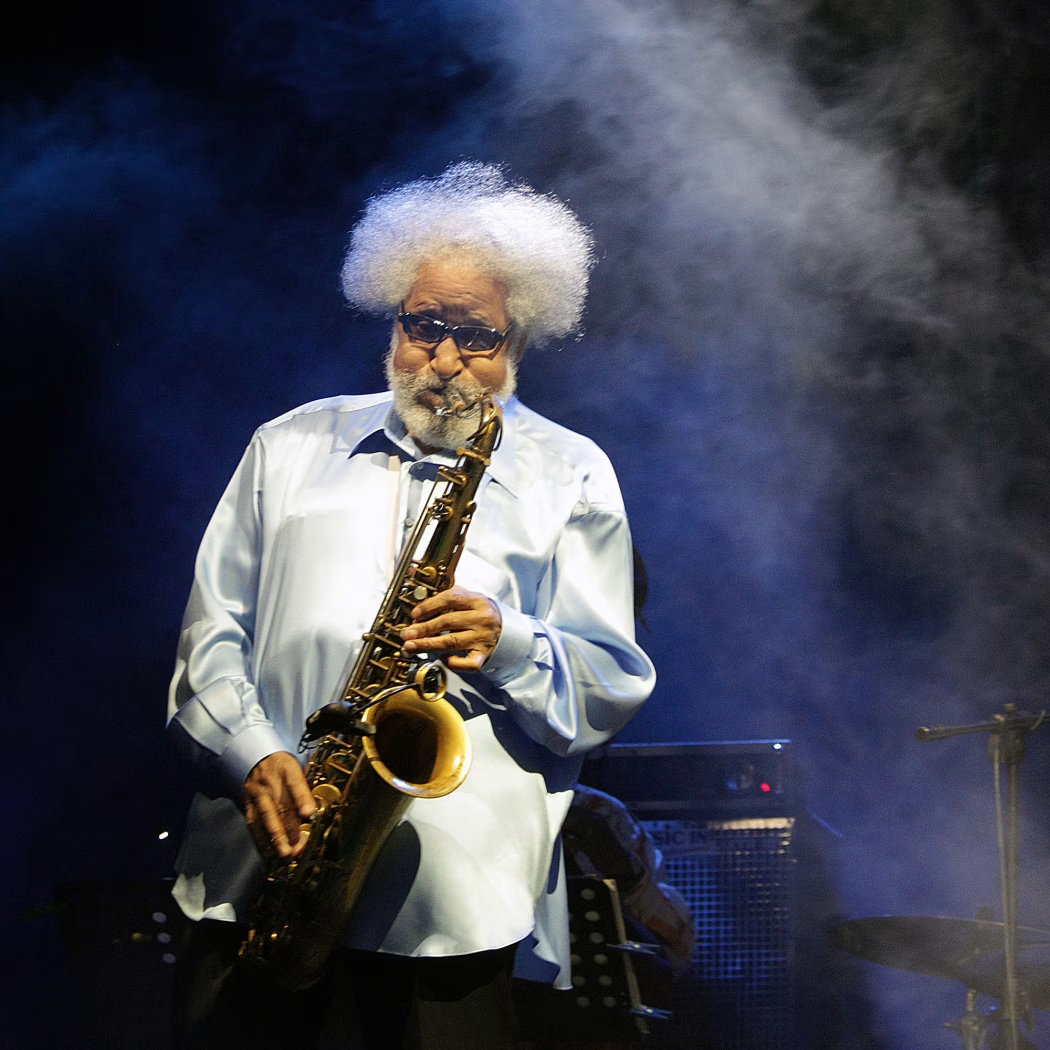

Sonny Rollins, the towering jazz saxophonist celebrated worldwide as the “Saxophone Colossus” and one of the last surviving giants of modern jazz, has died at the age of 95.
Rollins’ family confirmed in a statement shared on social media that the legendary musician “died this afternoon at his home in Woodstock, New York,” describing his passing as one met with “deep sorrow and profound love.”
For more than seven decades, Rollins stood among jazz’s most influential voices, redefining the genre with his bold improvisation, commanding tenor saxophone sound, and fearless musical experimentation. Born in Harlem to parents from the U.S. Virgin Islands, he drew inspiration from both the cultural energy of New York and the Caribbean rhythms of his childhood.
By his twenties, Rollins had already shared stages with jazz greats including Charlie Parker, Miles Davis, and Thelonious Monk. His landmark 1956 album Saxophone Colossus cemented his place in music history and produced the classic track “St. Thomas,” now regarded as one of jazz’s most recognisable recordings.
Never satisfied with artistic comfort, Rollins famously withdrew from public performance in the early 1960s and spent years practising alone on New York’s Williamsburg Bridge in search of musical renewal. The experience later inspired his acclaimed 1962 album The Bridge.
Rollins also collaborated beyond jazz, notably appearing on The Rolling Stones’ 1981 album Tattoo You. Even after health challenges forced him away from live performance, he continued revisiting his work and reflecting on his lifelong journey in music.
“I’m still alive because I’m still learning,” he once said.
With his passing, jazz loses not only a master musician but one of the final direct links to a transformative era in American music.






Leave a Reply