

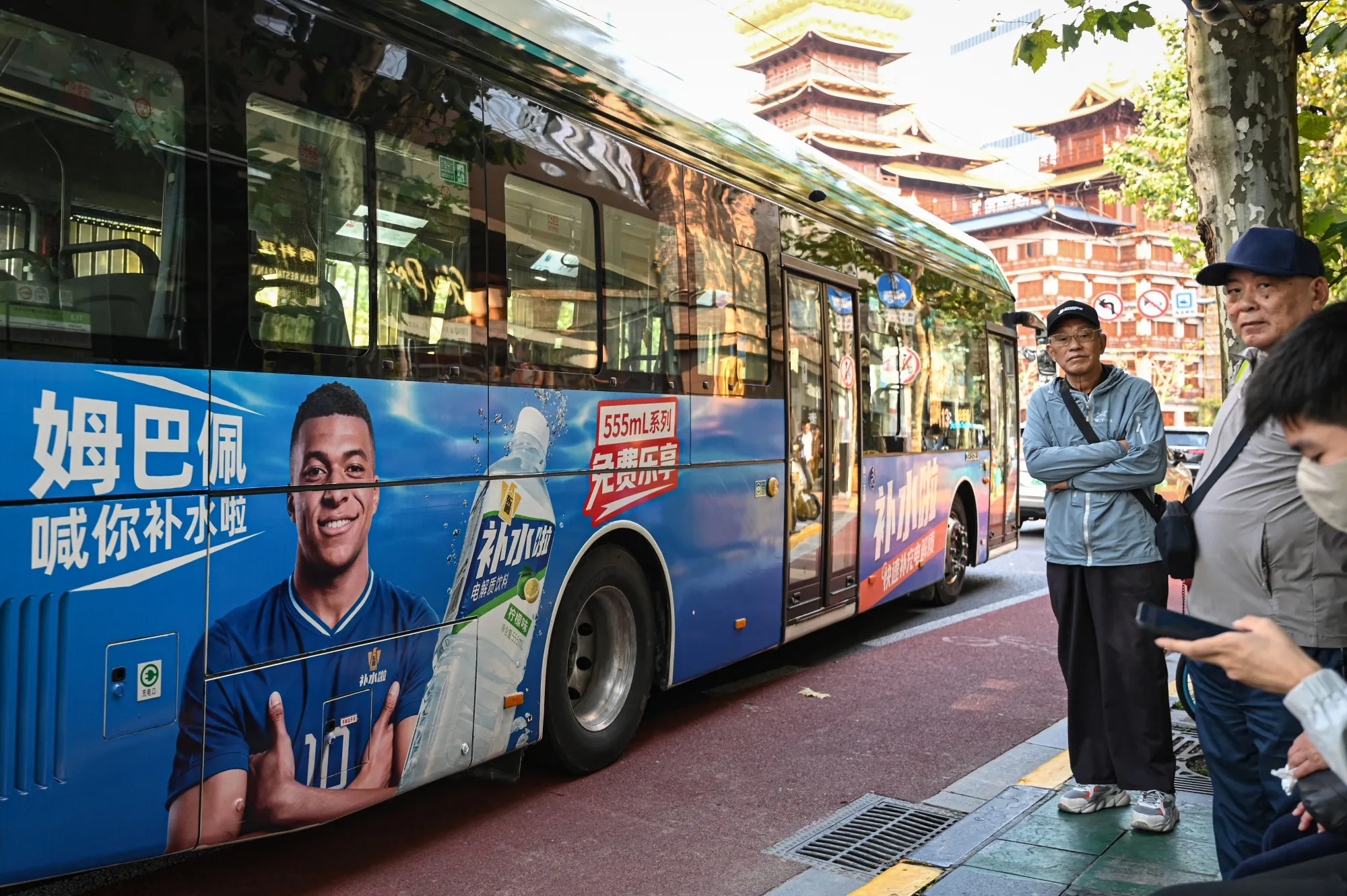

The backlash against French football star Kylian Mbappé over remarks seen as insulting Mao Zedong shows how little room for error celebrities and global brands have in China’s lucrative market.
Mbappé apologised on Tuesday, but criticism continued to spread across Chinese social media. Major Chinese brands ended their sponsorship deals with him. State television also blocked his matches, while some international sponsors removed posts featuring the Real Madrid forward.
The incident highlights the growing risks of offending Chinese consumers. A single remark can trigger widespread anger and threaten valuable business ties.
Shares of Mbappé’s sponsors, including On Holding AG, Eastroc Beverage Group Co. and China Mengniu Dairy Co., fell on Tuesday. Investors weighed the potential cost of the controversy in the world’s second-largest consumer market.
“China has undoubtedly grown both more sensitive about how it is represented overseas, and more capable of retaliating,” said Jeremy Chan, a senior analyst at Eurasia Group.
“A comment like Mbappé’s would probably have been ignored a decade ago in China, but today it is seen as unacceptable. Meanwhile, the power of the Chinese consumer market is too strong for even a global star like Mbappé to ignore.”
Mbappé made the remarks during an interview about an internet meme that appeared to depict him as Mao, the founding father of modern China. He later described his comments as “ill-judged”.
Real Madrid also expressed regret over any discomfort his words had caused in an online statement.
On Wednesday, Chinese Foreign Ministry spokesperson Guo Jiakun said Beijing took Mbappé’s apology seriously. A day earlier, Guo warned that any words or actions that offend the Chinese people would face widespread opposition.
Growing risks for foreign brands
China remains a major market for global businesses, even as consumers spend cautiously and favour local brands.
Football also offers foreign stars valuable marketing opportunities. The sport ranks second behind basketball in popularity in China, according to Ampere Analysis. State media reported that more than 200 million viewers had watched this year’s North American tournament on China Central Television’s livestreaming platforms by the end of the group stage.
However, foreign companies face growing pressure to avoid political and cultural missteps.
“The Mbappé incident illustrates how little grey area is left for foreign companies operating in China,” said Dan Wang, a director on Eurasia Group’s China team. “Doing business in China increasingly requires companies to be politically attuned.”
China’s ruling Communist Party newspaper, the People’s Daily, issued a similar warning on Wednesday.
“Once a line is crossed or the public is offended, all the glamour will quickly dissipate, and one may even face backlash,” the newspaper said. “Learning to respect different countries and cultural backgrounds is an essential lesson.”
Eastroc and Mengniu ended their sponsorship ties with Mbappé on Tuesday. Swiss sportswear brand On also removed posts featuring him from its Chinese social media account. Reports also said Dior, owned by LVMH, had deleted some posts featuring the player.
Yet the backlash continued despite his apology.
“Chinese consumers understand the power and scale of their buying power. ‘I didn’t know’ is no longer a valid excuse in their eyes for cultural missteps,” said Jessica Gleeson, head of retail consultancy BrighterBeauty in Shanghai.
“As your largest customer base, they expect you to do your homework.”
Apologies may no longer be enough
The controversy follows earlier disputes involving foreign brands and sports organisations. In 2019, the NBA faced a prolonged rift with China after Daryl Morey, then general manager of the Houston Rockets, expressed support for Hong Kong protesters.
Sports analyst Mark Dreyer said brands could no longer rely on apologies and silence to make controversies disappear.
“The playbook used to be, the company would put out a short, very apologetic Chinese post on Weibo and then lie low and wait for the next incident to come along,” Dreyer said. “But I think the NBA incident changed the game because it became so global.”
Olivia Plotnick, founder of Shanghai-based consultancy Wai Social, said companies and celebrities needed clear plans for handling such disputes.
“No brand or individual is exempt from China-sensitive topics, especially foreign brands and public figures who earn from Chinese consumers,” she said.
“Companies and celebrities with China exposure should have an action plan in place that includes explicit decision rights and communication standards.”






Leave a Reply