



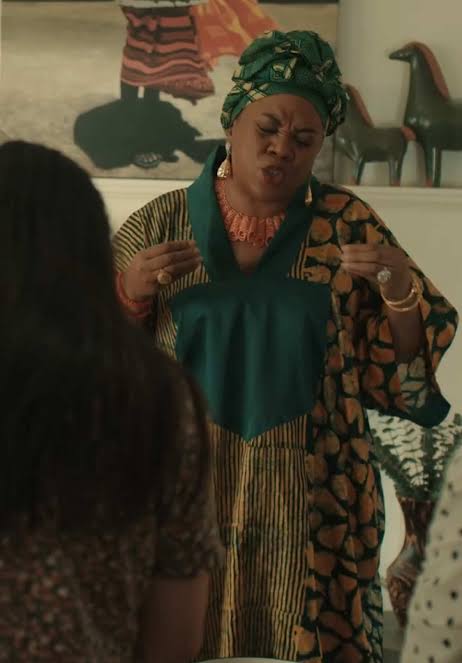
A resurfaced clip from Mo Season Two has put award winning actress Stella Damasus at the center of an online debate as viewers questioned the authenticity of the Igbo accent used in her role. The scene, which began trending again on Saturday, features Damasus playing Ginika, an overly spiritual Igbo elder who prays for divine direction on everything from marriage decisions to avoiding nosy neighbors and finding affordable Manuka honey at a farmers market.
What sparked the backlash was not the storyline but the delivery. Many viewers felt that her accent sounded overly thick and unnatural, with some calling it a forced stereotype rather than a true representation of Igbo speech. Side by side comparisons of her regular Nollywood voice and the Mo clip circulated on social media, leading users to ask why she adopted an accent they considered exaggerated.
Viewers Question Character Portrayal
Comments online show a mix of frustration and confusion. Some Nigerians argued that although Damasus is of Igbo heritage, the character’s accent felt like something written to fit Western expectations of how an “African elder” should sound. Others questioned why the production team did not opt for a more grounded performance, especially since the show is set in a community with diverse African immigrants.
A few viewers defended the actress, suggesting that the character was intentionally written in a humorous and hyper religious style, which may have influenced her vocal choices. Still, the dominant reaction leaned toward disappointment, with many using the clip to highlight long standing concerns about how global productions portray Nigerian voices.
Damasus Has Spoken About Accent Pressure Before
Although she has not issued any new statement about the resurfaced clip, Stella Damasus has previously discussed the struggles Nigerian actors face in Hollywood. In past interviews, she explained that many casting directors expect Africans to sound the same, often asking for thick, generic accents instead of embracing the natural differences between Nigerian ethnic groups.
According to her earlier comments, actors are sometimes pressured to perform accents that do not align with their lived experiences or cultural identities. This context led some fans to argue that the accent choice may not have been entirely her own.
As the discussion continues, the clip has renewed conversations about representation, the evolution of African storytelling on global platforms, and how cultural authenticity can sometimes get lost between creative direction and audience expectations.








Leave a Reply