



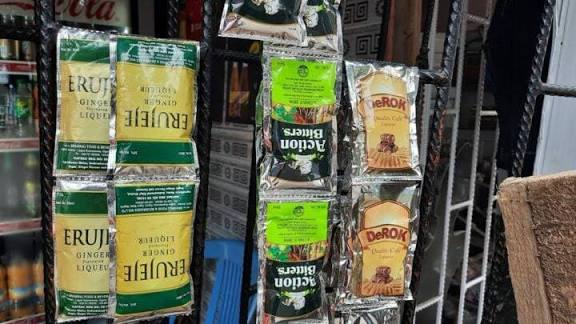
The National Agency for Food and Drug Administration and Control (NAFDAC) has commenced nationwide enforcement of the ban on the production and sale of sachet alcohol and small PET bottled alcohol as part of a public health strategy to reduce harmful alcohol consumption and protect vulnerable groups.
NAFDAC Director-General Professor Mojisola Adeyeye announced the enforcement at a media briefing in Lagos on Wednesday, confirming that the agency has begun implementing a total ban on alcoholic beverages packaged in sachets and polyethylene terephthalate (PET) bottles below 200 millilitres.

The move follows a resolution by the Senate in November 2025 directing NAFDAC to enforce the ban by the end of December 2025. Although enforcement had been temporarily paused earlier for consultations with stakeholders, the agency said it has received renewed backing from the Senate to proceed with full implementation.
According to Professor Adeyeye, the nationwide enforcement is intended to protect public health, especially for children, adolescents, and young adults, by reducing access to cheap, high-alcohol-content products that are easily concealed and sold in small, portable packages.
“NAFDAC is not against alcohol consumption, but we are against its proliferation in high concentrations in sachets and small bottles,” she said, noting that some of the products previously contained alcohol levels between 50 and 90 percent, which pose significant health risks.
The Director-General also recalled that manufacturers were previously asked to reduce alcohol content to 30 percent and given a transition period from December 2018 to January 31, 2024 to adjust their operations. Many resisted, citing concerns about job losses and investment setbacks.
NAFDAC reaffirmed its commitment to safeguarding public health and emphasised that enforcement will continue until full compliance is achieved across Nigeria.
The ban and its enforcement have drawn mixed reactions. Some public health advocates have welcomed the measure, saying it addresses concerns over young people’s access to inexpensive alcohol and could contribute to reducing substance abuse and related social issues.
However, stakeholders such as the Manufacturers Association of Nigeria (MAN) and civil society organisations have raised concerns that the ban could have negative economic implications, including potential job losses and impacts on small business owners and workers in the beverage sector.
These concerns highlight the challenge of balancing public health priorities with economic interests, especially in sectors where informal markets and small-scale producers are significant.
Enforcement actions are expected to involve inspections of production facilities, distribution networks, and retail outlets to ensure that sachet and small PET bottled alcoholic beverages are no longer manufactured or sold. Regulators may also work with local authorities to remove and destroy non-compliant products from the market.
NAFDAC has urged manufacturers and distributors to comply fully with the ban and focus on producing alcohol products in larger, regulated packaging that meets safety standards.
As enforcement continues, the government and regulatory bodies will likely monitor compliance levels and may engage in further public awareness campaigns to educate consumers and businesses about the reasons behind the ban and the health risks involved.









Leave a Reply