



Nigerian actress and trained health professional Jemima Osunde has shared a deeply personal account of how her medical work once affected her mental health, describing a case that left her shaken and led her to rethink how she engaged with the medical profession.
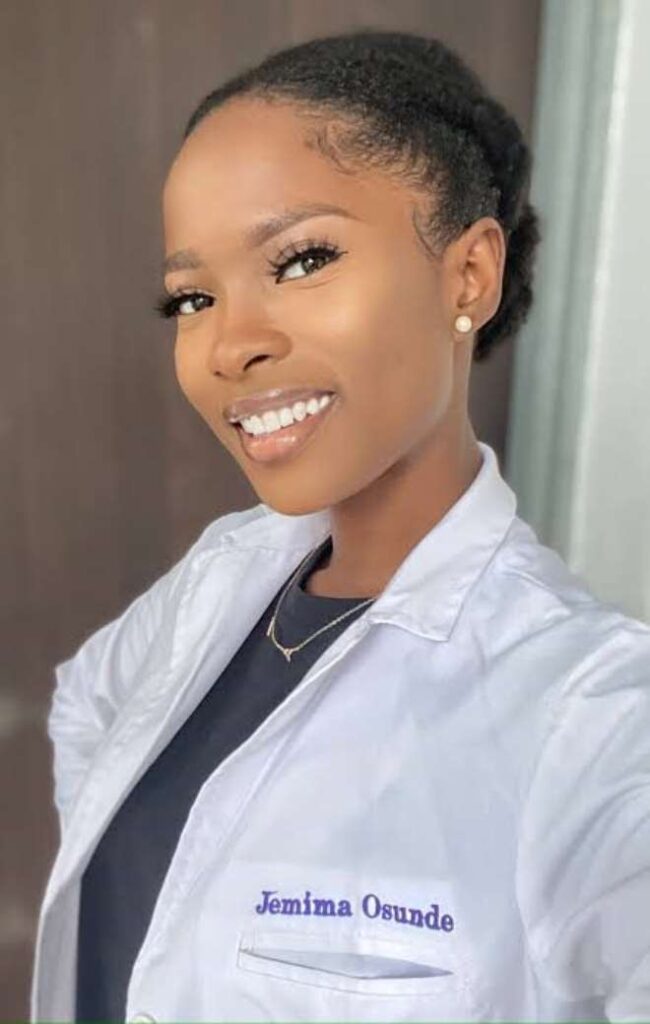
Osunde, who studied physiotherapy at the University of Lagos and balanced medical training with her rising acting career, spoke candidly in an interview hosted by musician and interviewer Falz about the emotional strain that frontline medical experiences had on her well-being.
In the interview, she revealed that at one point she felt depressed by the realities of medical work, recalling a particularly harrowing case involving a 14-year-old girl. The young patient had developed a vesicovaginal fistula (VVF) after a traumatic vaginal delivery at such a young age, and her baby had cerebral palsy. Osunde said the experience was deeply upsetting because the girl’s suffering highlighted the harsh intersection of poor reproductive health outcomes and the emotional burden placed on caregivers. Her comment has since stirred conversations about the challenges faced by health professionals in difficult clinical situations.

The condition Osunde described, VVF, is a childbirth injury that can happen when prolonged or obstructed labour ruptures tissue between the vagina and bladder. It often leads to long-term complications such as incontinence and social stigma, especially where emergency obstetric care is not readily available. Nigeria carries a significant share of global fistula cases, with tens of thousands of new instances each year, many of which are preventable with timely medical intervention.
Osunde’s journey into healthcare was driven by a genuine desire to make a difference, and although she later found enormous success in Nollywood, she continued practicing medicine alongside her entertainment career. She completed her studies while making a name for herself on screen, achieving academic and artistic milestones concurrently.
In her conversation with Falz, she explained that the psychological weight of treating severe cases sometimes made it hard to cope, particularly because some situations involved young patients suffering from complex health challenges. The emotional toll of witnessing human suffering at close range contributed to her moment of depression with medical work.

Despite the strain, Osunde also spoke about the invaluable lessons she learned through patient care. Her medical background has shaped her outlook on life and deepened her empathy, both as a person and an artist. She noted that the experience of caring for patients helps bring authenticity to her work when portraying emotional or vulnerable characters onscreen.
Her interview also resonated with many Nigerians who are familiar with the country’s healthcare challenges. Statements like Osunde’s illuminate the mental health pressures healthcare workers often face, especially in environments where resources are limited and emotional support for staff may be minimal. Commentators have pointed out that depression among medical professionals is increasingly recognised as a real concern, driven by long work hours, exposure to trauma, and the weight of life-and-death decisions made daily.
Fans and followers took to social media after the interview to praise Osunde for her honesty. Many thanked her for drawing attention to the emotional impact of medical work and highlighted how her reflections reflect stronger conversations about mental health support for frontline workers.
Through her public platform, Osunde has sparked greater awareness not only of her artistic talent but also the human cost experienced by those in caring professions. Her reflections remind Nigerians of the complex realities behind the white coats and scrubs, and the courage it takes to serve others in moments of profound vulnerability.









Leave a Reply