

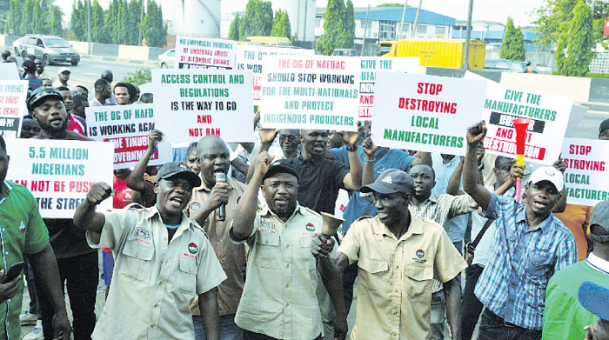

Nigeria’s alcoholic beverage industry is maintaining pressure on regulators over the enforcement of a ban on sachet and small‑sized alcoholic drinks, warning that the policy could trigger wide scale job losses and discourage local investment.
Industry groups, led by the Distillers and Blenders Association of Nigeria (DIBAN), say the prohibition on alcoholic beverages packaged in sachets and PET bottles below 200ml continues to generate strong opposition among manufacturers, labour unions and civil society organisations. Stakeholders argue that the ban, which has now taken effect, threatens a value chain that supports millions of Nigerians.
Industry estimates suggest that more than five million people earn a living directly or indirectly from the sector which includes production, distribution, retail and logistics. Labour leaders insist that enforcing the policy without a phased transition risks disrupting livelihoods and worsening unemployment at a time of economic strain.
Distillers also warn that trillions of naira in local investment could be jeopardized if indigenous manufacturers are forced to halt production. Many have questioned why enforcement proceeded despite earlier reports that the Office of the Secretary to the Government of the Federation advised broader consultations with stakeholders before implementation.
Union representatives argue that the timing of the ban sends the wrong signal to investors, particularly as Nigeria seeks to attract and retain manufacturing capital. They maintain that abrupt regulatory action undermines confidence and contradicts government commitments to support local industry growth.
The National Agency for Food and Drug Administration and Control (NAFDAC) has defended the ban on public health grounds, citing concerns about alcohol abuse and product safety. However, industry stakeholders dispute claims that sachet alcohol products contain dangerously high alcohol content, describing such assertions as misleading. They argue that quality concerns should be addressed through stricter standards, improved monitoring and enforcement, rather than blanket prohibition.
Civil society groups have also raised concerns about the social impact of the ban, noting that sachet alcohol remains the most affordable option for low‑income consumers. They warn that removing regulated products from the market could push consumption underground, making it harder to control access and ensure safety.
Industry players are urging the Federal Government to review the policy, engage stakeholders, and consider alternative regulatory measures that balance public health objectives with economic realities.
For many Nigerians, the debate over sachet alcohol has evolved into a broader test of how Nigeria manages regulation, job protection and investor confidence in a fragile economy as issues about bans have consistently occured without the right measures put in place to abate the consequences of such bans.
Hopefully, options will be weighed better and policies concerning bans that affect the livelihood of Nigerians will be done strategically.
Picture Credit: The Nation









Leave a Reply