


The Federal Government has inaugurated a Book Ranking and Selection Committee as part of renewed efforts to improve the quality, relevance, and affordability of textbooks used across Nigerian schools.
The committee was formally inaugurated by the Federal Ministry of Education, with officials explaining that the initiative is designed to address long-standing concerns about substandard learning materials, high textbook costs, and the uneven quality of books currently in circulation within the basic and secondary education system.
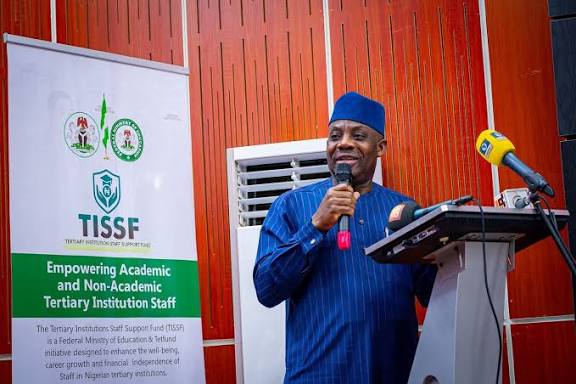
According to the ministry, the Book Ranking and Selection Committee will be responsible for evaluating textbooks submitted by publishers, ranking them based on clearly defined standards, and recommending approved titles for use in public schools nationwide. The process is expected to ensure that only books that meet curriculum requirements, educational value, and cost-effectiveness standards are adopted.
Education authorities say the move is part of broader reforms aimed at strengthening learning outcomes and easing the financial burden on parents and guardians, many of whom struggle to afford multiple textbooks for their children each academic year.
For years, education stakeholders have raised concerns about the quality of textbooks used in Nigerian schools, with reports of outdated content, factual errors, poor alignment with the national curriculum, and inflated prices. In some cases, parents are required to purchase multiple books for a single subject, driving up the overall cost of education.
The newly inaugurated committee is expected to introduce transparency and uniformity into the textbook approval process. Officials explained that the ranking system will focus on content accuracy, curriculum compliance, clarity of language, cultural relevance, durability, and pricing.
By ranking textbooks rather than approving an unlimited list, the government hopes to encourage healthy competition among publishers while pushing down prices. Publishers whose books meet higher standards are more likely to be selected, while those with poor-quality materials may be excluded.
Members of the committee include curriculum experts, education policymakers, experienced teachers, and representatives from relevant regulatory bodies. Their task will be to review submitted textbooks subject by subject and grade by grade.
Once assessed, books will be ranked and shortlisted, with the approved list circulated to schools and education authorities. Public schools will be guided to select from the recommended titles, reducing the confusion and inconsistency that currently exist in textbook selection.
The Ministry of Education noted that the process will be reviewed periodically to ensure books remain current and aligned with evolving curriculum standards, especially in science, technology, and vocational subjects.
Government officials believe the committee will directly benefit students by ensuring they learn from accurate, engaging, and well-structured materials. Teachers are also expected to benefit from having access to standardized, high-quality textbooks that support effective classroom instruction.
For parents, affordability is a major focus. By regulating textbook selection and discouraging unnecessary duplication, the government aims to lower the overall cost of learning materials. This is particularly significant for families with multiple children in school.
Some education advocates have welcomed the move, describing it as a step toward restoring confidence in Nigeria’s education system. Others, however, have called for strict monitoring to ensure the committee operates independently and free from publisher influence.
On social media, reactions to the announcement have been mixed. While many Nigerians praised the initiative as overdue, others expressed skepticism, questioning whether the committee would truly address pricing issues or become another bureaucratic layer.
Some users also demanded transparency in the ranking process, urging the government to publish evaluation criteria and final selections to prevent favoritism. Calls for digital textbooks and open educational resources also featured prominently in online discussions.
The Federal Ministry of Education has assured the public that the committee’s work will be guided by clear rules and accountability measures. Officials stated that the ultimate goal is to improve learning outcomes and make quality education more accessible to Nigerian children.








Leave a Reply