


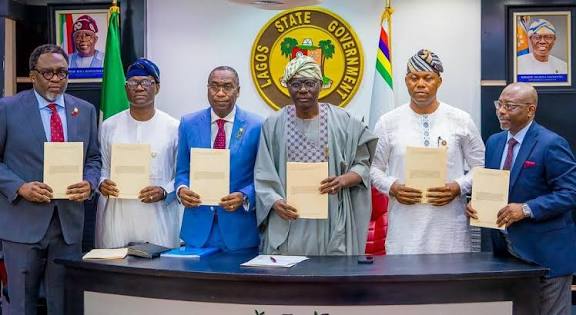
Governor Babajide Sanwo-Olu has officially signed the Lagos State 2026 Appropriation Bill into law, approving a total budget size of N4.44 trillion for Africa’s most populous state. The signing took place on Thursday at the Lagos State Government House, marking the final stage of the legislative process following the bill’s passage by the Lagos State House of Assembly.
The 2026 budget reflects the state government’s continued emphasis on infrastructure development, economic growth, and public service delivery. According to details released after the signing, N2.3 trillion, representing 52 percent of the total budget, has been earmarked for capital expenditure, while N2.1 trillion, or 48 percent, will be spent on recurrent expenditure.
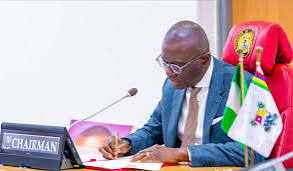
Governor Sanwo-Olu described the budget as a strategic financial plan designed to sustain Lagos’ development momentum while responding to the needs of residents in a challenging economic climate. He noted that the significant allocation to capital projects underscores the administration’s commitment to expanding infrastructure and improving the quality of life across the state.
The capital expenditure component is expected to fund major projects across transportation, healthcare, education, housing, security, and environmental management. Ongoing road construction, rail expansion, urban renewal initiatives, and upgrades to public hospitals and schools are among the areas likely to benefit from the funding.
Recurrent expenditure, which accounts for just under half of the budget, will cover salaries, pensions, overhead costs, and the day-to-day running of government ministries, departments, and agencies. State officials say the balance between capital and recurrent spending is intended to ensure fiscal responsibility while maintaining efficient public service operations.
Speaking after the signing, Sanwo-Olu reaffirmed his administration’s focus on continuity and completion of existing projects rather than starting new ones without clear funding plans. He emphasized that prudent budgeting remains critical as Lagos continues to navigate rising costs, population growth, and increased demand for public infrastructure.
As news of the signed budget circulated, reactions quickly emerged on social media. Some Lagos residents welcomed the emphasis on capital projects, expressing hope that the allocations would translate into visible improvements in roads, transportation, and social services. Others, however, questioned implementation timelines and called for greater transparency in how funds would be deployed across sectors.
Economic analysts noted that the N4.44 trillion budget represents one of the largest in Lagos State’s history, reflecting both inflationary pressures and the scale of governance required in a megacity of over 20 million people. They pointed out that sustaining a capital-heavy budget would require strong internally generated revenue and careful debt management.
The Lagos State House of Assembly had earlier defended the budget structure, stating that the proposed allocations were the outcome of extensive reviews, committee engagements, and sector-by-sector assessments. Lawmakers said their goal was to ensure that public funds are directed toward projects with measurable social and economic impact.
Sanwo-Olu also acknowledged the role of the legislature and civil service in shaping the final budget, describing the process as collaborative. He assured residents that mechanisms would be put in place to monitor execution and ensure that budgetary provisions align with the state’s development agenda.
With the signing of the 2026 Appropriation Bill, Lagos State now moves into the implementation phase, as ministries and agencies begin drawing from approved allocations to execute planned programmes and projects throughout the fiscal year.








Leave a Reply